Background info

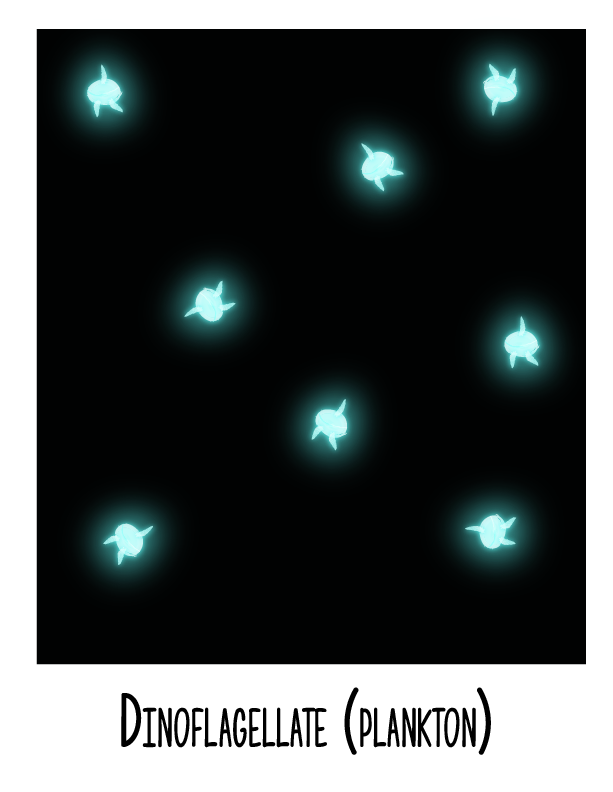
Meet the Dinoflagellate
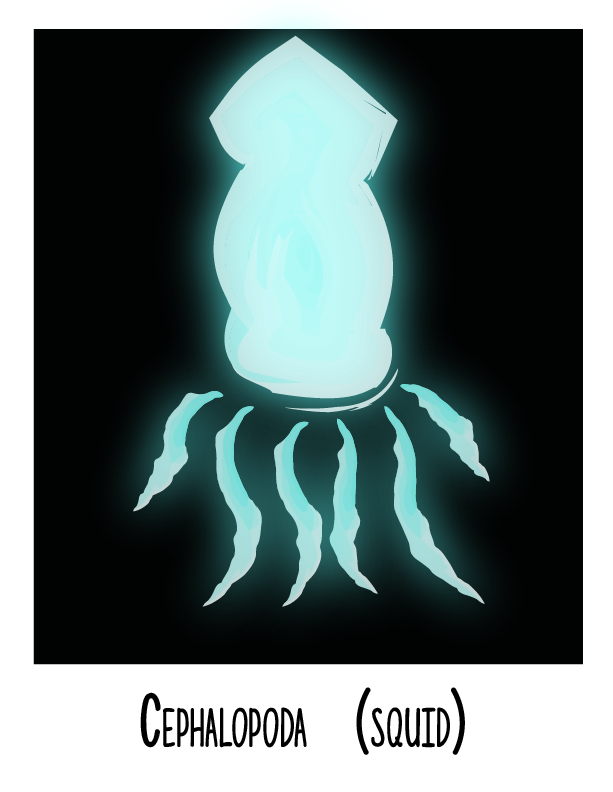
Meet the Cephalopod
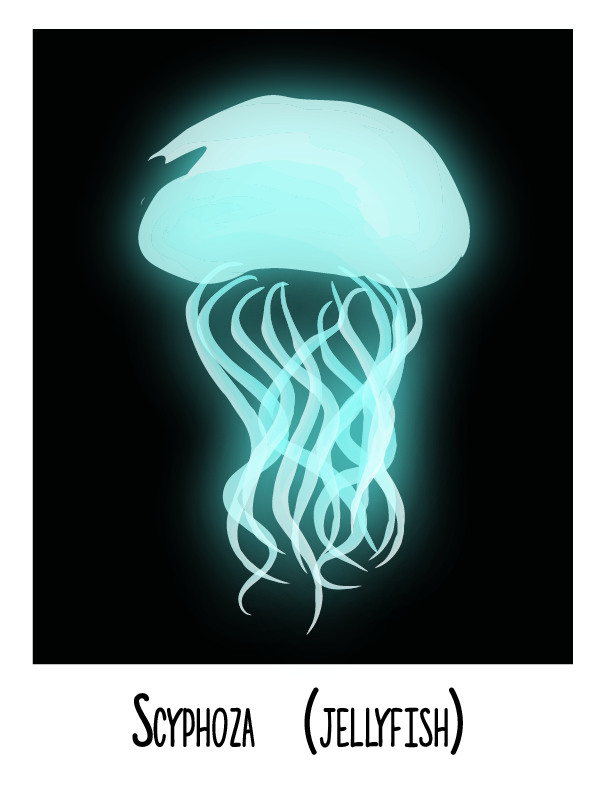
Meet the Jellyfish
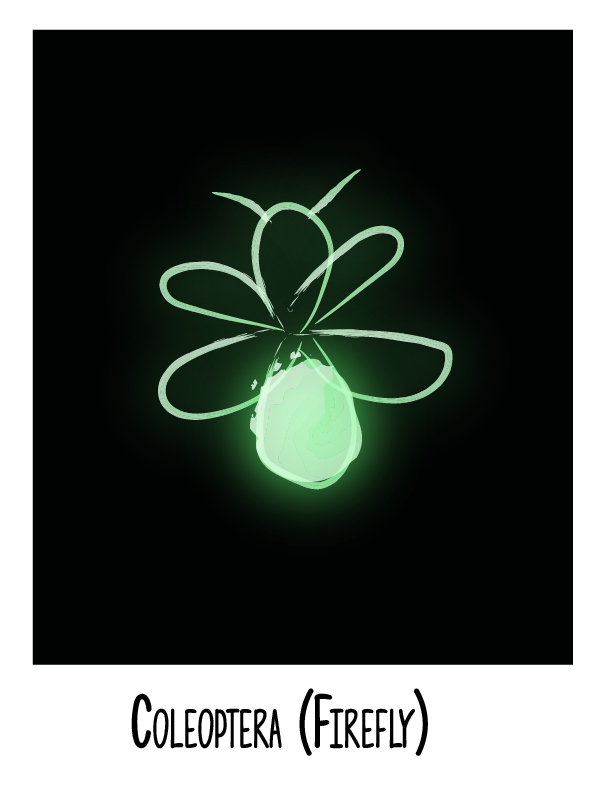
Meet the Firefly
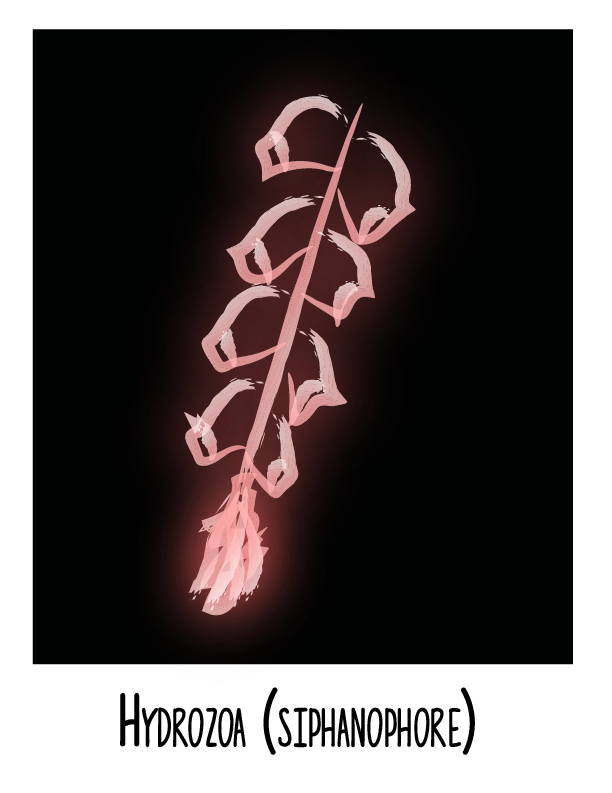
Meet the Siphonophore
Use the buttons to meet someone else.
Rank :
Phylum Dinoflagellata
 e
e
Purpose :
Burglar Alarm
Commonly Known As :
Plankton
Luciferin Type :
Dinoflagellate
Environment :
Marine
Color :
Red, Blue
Notes :
Dinoflagellate in large groups create bioluminescent bays in Puerto Rico and Jamaica, which are popular tourist destinations. (haddock). Include at least 18 different genera.
Rank :
Family Lampyridae
 e
e
Purpose :
Communication, Mate Attraction
Commonly Known As :
Fireflies
Luciferin Type :
Other (known)
Environment :
Terrestrial
Color :
Green, Yellow
Rank :
Class Scyphozoa
 e
e
Purpose :
Burglar Alarm
Commonly Known As :
Jellyfish
Luciferin Type :
Coelenterazine
Environment :
Marine
Color :
Multicolored, mostly blue
Rank :
Class Hydrozoa
 e
e
Purpose :
Lure Prey
Commonly Known As :
Siphonophores
Luciferin Type :
Coelenterazine
Environment :
Marine, shallow water
Color :
Red, Blue
Notes :
Most notable species Aequora Victoria.
Rank :
Class Cephalopoda
 e
e
Purpose :
Startle, counterillumination, distractive body parts, lure/confuse prey
Commonly Known As :
Squid, Octopi
Luciferin Type :
Bacterial, Celenterazine, Unknown
Environment :
Marine
Color :
Many
Notes :
Octopoteuthis has a variety of coloration patterns and will leave behind a glowing arm as a decoy to predators. There are 70 luminous genera.
Meet My Friends
Hover to get to know them
Bacterial
Dinoflagellate
Vargula
Multiple
Coelenterazine
Other
Burglar Alarm
Illuminate Environment
Startle
Deter Settlers
Distractive Body Parts
Attract Prey
Predator Warning
Release Heat
Multiple
Communication
Mate Attraction
Misdirection
Unknown
Green
Red
Yellow
Blue
Multiple
Marine
Terrestrial
Let's Party
Use the buttons to rearrange us by category.
References
Authority, W. T. (n.d.). Glow worms and fireflies. Retrieved December 11, 2017, from http://www.wettropics.gov.au/fireflies
Haddock, Steven H.d., et al. “Bioluminescence in the Sea.” Annual Review of Marine Science, vol. 2, no. 1, 2010, pp. 443–493., doi:10.1146/annurev-marine-120308-081028. http://www.annualreviews.org/doi/pdf/10.1146/annurev-marine-120308-081028
New Glowing Millipede Found; Shows How Bioluminescence Evolved. (2015, May 05). Retrieved December 11, 2017, from https://news.nationalgeographic.com/2015/05/150504-glowing-millipedes-evolution-insects-animals-california/
Swimming Sea Cucumber: Adaptation. (n.d.). Retrieved December 11, 2017, from http://bioweb.uwlax.edu/bio203/f2013/langley_andr/adaptation.htm
UCSB (Ed.). (n.d.). The Bioluminescence Web Page. Retrieved December 11, 2017, from http://biolum.eemb.ucsb.edu/